
OUR WORK
Projects we support include the following:
INDIA · PARTNER SINCE 1991
Akanksha Foundation
14,700+ pupils • 850+ educators • 27 schools • 3 cities • 5,700 alumni
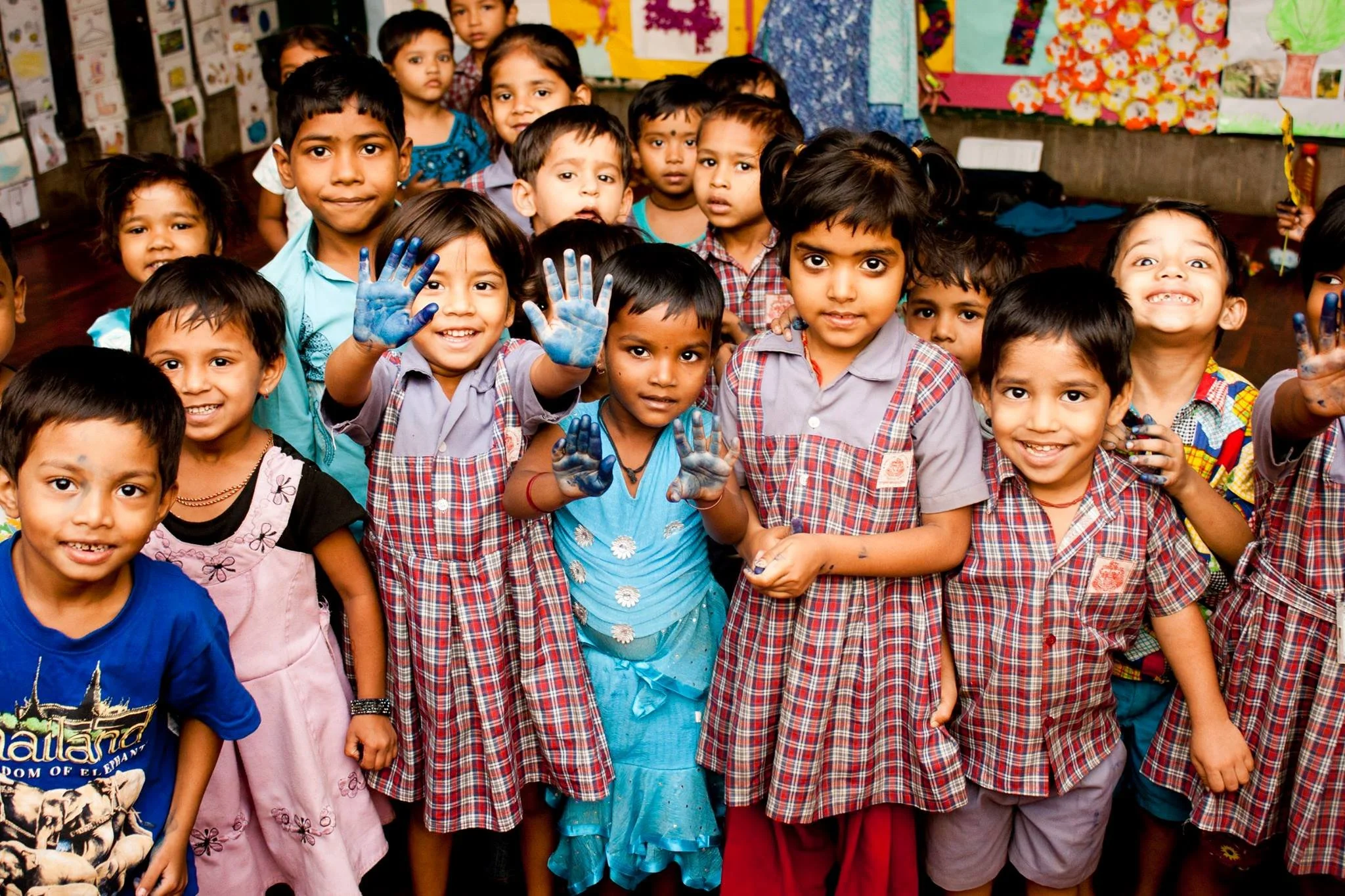
The Akanksha Foundation currently runs a network of 27 innovative schools in partnership with local municipal corporations to provide free, high-quality, holistic education to children from low-income communities in Pune, Mumbai, and Nagpur. It currently serves 14,700+ students and 5,700 alumni through its 850+ educators.
Akanksha was set up in 1991 by Shaheen Mistri with funding from KINOE. The first Akanksha center had 15 children and was based at Holy Name School in Colaba, Mumbai. We have continued to provide financial support ever since.
Akanksha builds a 20-year partnership with the children, their parents and community, and creates pathways out of poverty through transformative education. Its vision is to equip all children with the knowledge, skills, and values they need to lead empowered lives.
78% of Akanksha students graduate high school with distinction, compared to 41% in Maharashtra state. 75% of alumni have enrolled in undergraduate programs, surpassing national averages in India. 74% of Akanksha’s alumni are employed full-time with average monthly income that is more than double the national average for individuals aged between 25-30. Akanksha alumni score 15% higher in professional skills such as communication, decision-making, and problem-solving than their peers. 50 Akanksha alumni have been admitted to prestigious national and international institutions, and 30% to colleges in Mumbai and Pune.
“
[Quote from Akanksha Pupil]
INDIA · PARTNER SINCE 2008
Teach for India
1,000 Fellows teach in classrooms across 9 cities • 50 million children reached
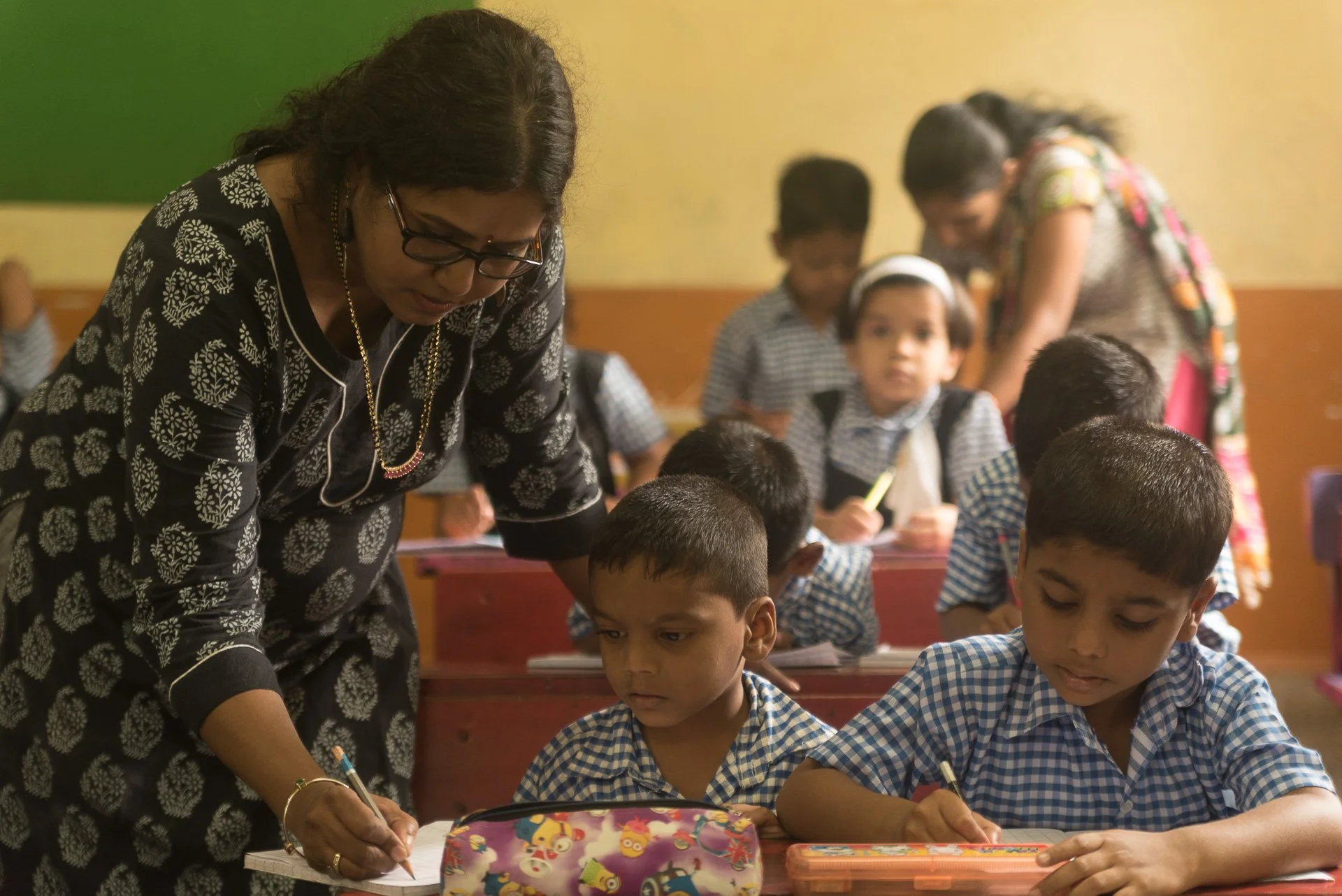
Teach for India was founded in 2008 with the support of KINOE on the belief that India’s education system is the fastest, most effective path to ensure that every child lives in an India free of poverty and filled with love. KINOE has continued to provide funding since.
India may have a space programme and nuclear capability, but 46 million of the country’s poorer children do not go to school, and of those who do, 73% are already behind by Grade 3, and 53% drop out before Grade 10. Teach for India’s mission is, therefore, to build a movement of leaders working together at all levels of the system to provide an excellent education to ALL of India’s children.
Addressing the complex challenge of educational inequity is like solving a seemingly impossible jigsaw puzzle; successfully putting the pieces together demands leadership and a collective commitment. For this reason, Teach for India aims to catalyze a wider movement of leaders towards systemic change in India’s education landscape.
Around 1,000 Teach for India fellows teach in classrooms across 9 cities. 33,500 students are directly impacted in its classrooms. Around 5,800 Alumni continue to serve children at depth and scale, with 50 million children reached by its Alumni movement and over 160 organizations founded by Alumni.
Over the past 15+ years, Teach for India has demonstrated the effect of a strong multiplier - deep impact, at all levels of the system, nationwide. Teach for India’s north star is 50,000 Leaders working collectively, with love, to transform the lives of 1 in 10 children from low-income communities in its regions, through an education that unleashes the potential of Self, Others, and India..
“
[Quote from Teach for India Pupil]
NEPAL • PARTNER SINCE 2000
Lo Kunphen Medical School
61 students • 2 Himalayan communities: Mustang & Pokhara
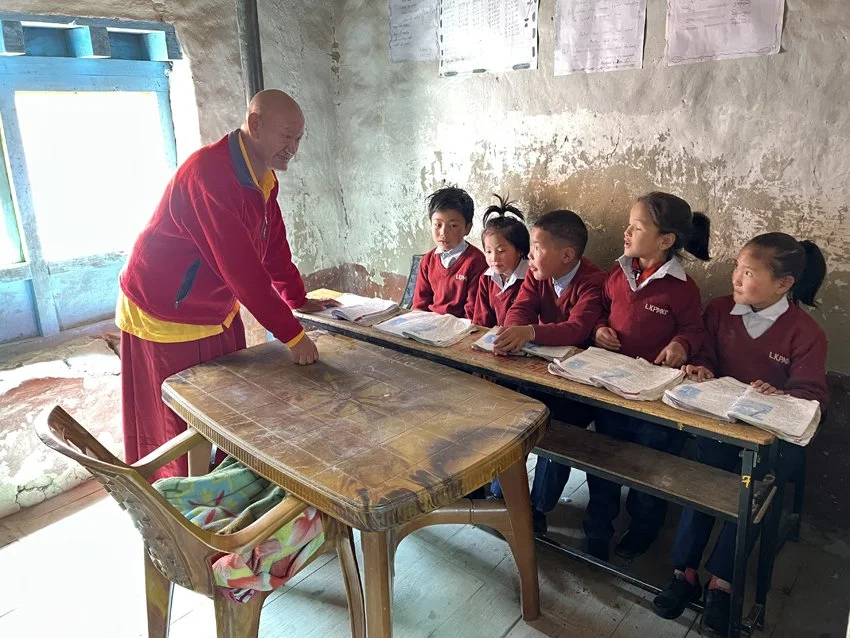
Since 2000, with the support of KINOE, Lo Kunphen School has been educating young people from high Himalayan backgrounds, with a specific focus on transmitting the amchi tradition of Sowa Rigpa (Tibetan Medicine) to present and future generations. The school was founded by brothers Amchi Gyatso Bista and Amchi Tenjing Bista, who represent a lineage of practitioners serving as court physicians and Buddhist priests to the King of Lo (Mustang) for many generations.
The school was started with 11 students, and now has 61. Students in Classes 1-6 divide their time between Lo Kunphen School in Lo Manthang-5, Upper Mustang, Nepal, and a branch of the school located in Hemja-25, Pokhara. This model allows students to benefit from a culturally rooted education in a rural, high-mountain environment (often close to their families) and the opportunity to proceed through their annual curriculum without disruption due to challenges of climate and teacher shortages – a common problem for remote, high-mountain students in Nepal. The students in Classes 7-12 reside year-round in Lo Kunphen’s Pokhara location.
Beyond providing a culturally appropriate, fully modern, and comprehensive education and helping secure the future of Sowa Rigpa in Nepal, the school strives to create a caring and affectionate environment for students, instilling values of self-reliance and encouraging them to become successful citizens of the country and world. Many of Lo Kunphen’s students come from poor or otherwise underprivileged families and communities, both from Mustang and from neighboring regions in the Nepal Himalaya.
“
[Quote from Lo Kunphen Pupil]
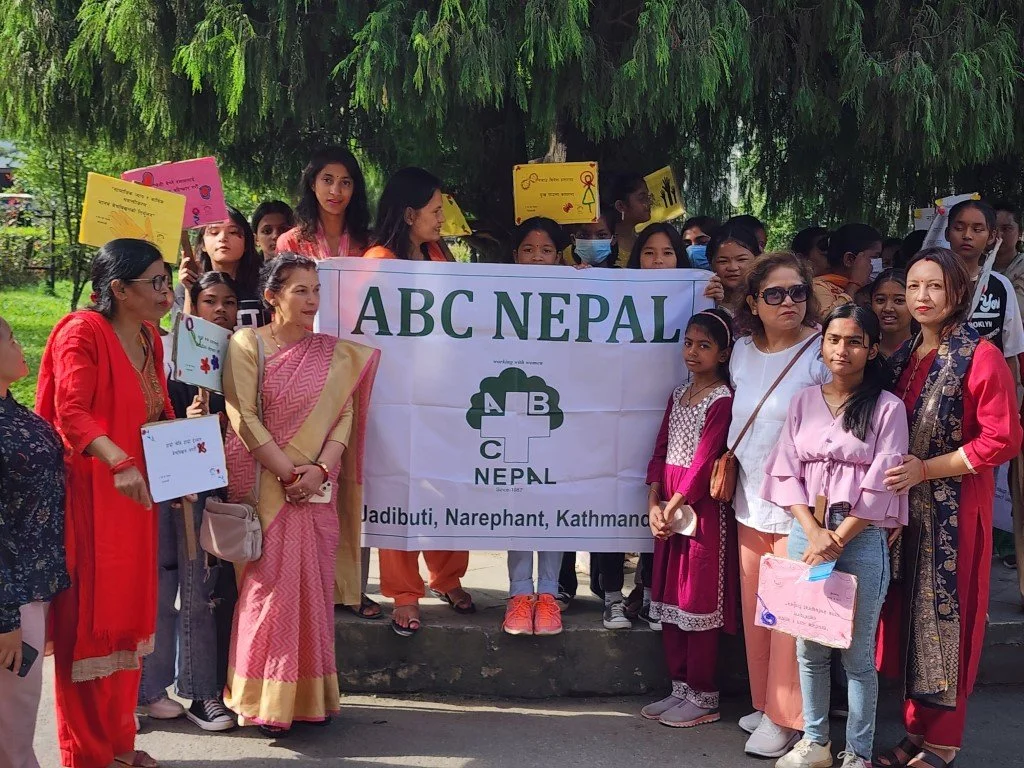
ABC Nepal is a non-profit social organization established in 1987 by Durga Ghimire and associates. ABC Nepal stands for Agro-forestry, Basic Health and Cooperative. It works for women’s and children’s rights with a special focus on the prevention of human trafficking. It was the first organization in Nepal to publicize the issue of trafficking in persons.
Women and girls’ low status, cultural traditions, and economic dependence make them vulnerable to trafficking, often lured by promises of better opportunities abroad. The scope of trafficking in Nepal is complex due to porous borders, poverty, unemployment, gender discrimination, and migration. Major forms of trafficking include sexual exploitation, exploitation of minor workers abroad, child labor, bonded labor, and illicit transplantation.
ABC Nepal addresses trafficking within the larger context of gender-based violence and socio-cultural realities. Beyond crime prevention, the organization focuses on building systems and empowering marginalized communities with education, skills, and economic opportunities.
In addition to prevention and interception, ABC Nepal rehabilitates rescued women and girls by providing counseling, education, skills training, medical care, food, and shelter. Seed funding is offered to start small businesses, helping them achieve economic independence and reintegration into society.
The organization's continued work reflects a simple but demanding vision: a Nepal where women, children, and marginalized communities can live safely, with dignity, and with real opportunities to shape their own futures.
NEPAL PARTNER SINCE 2005
ABC Nepal
1st Nepalese anti-trafficking entity • 8,000 women & children served • 190 countries
“
[Quote from ABC Nepal Pupil]